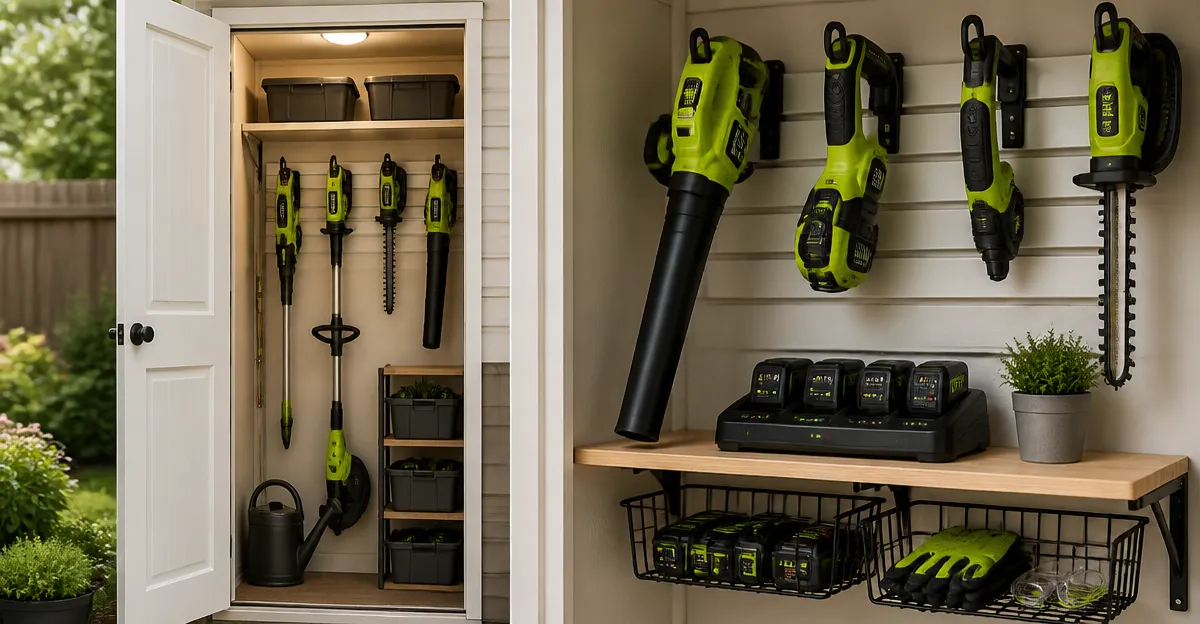
How to Store Cordless Garden Tools in a Small Shed or Closet: Space-Saving, Battery-Safe Organization Tips
Introduction
In compact sheds or closets, every inch of space competes with the need for safe battery storage and quick tool access. This guide teaches readers how to maximize limited square footage while protecting lithium‑ion batteries from temperature extremes. One will learn to evaluate the workspace, select appropriate storage hardware, and implement a systematic layout that reduces clutter. The result is a tidy, efficient area that prolongs tool life and improves productivity.
What You'll Need
- POKIPO Power Tool Organizer Rack – wall‑mounted, 4‑tier rack with integrated power strip.
- DeWalt TSTAK Extra Large Tool Box – stackable, removable‑tray box for portable storage.
- BLACK+DECKER Stackable Storage System – modular 3‑piece set with rolling tote.
- Craftsman Small Parts Organizer – 10‑compartment bins for batteries and accessories.
- Sttoraboks Garden Tool Organizer Rack – free‑standing steel rack for larger garden implements.
Step 1: Assess the Available Space
Begin by measuring the length, width, and height of the shed or closet, noting any obstructions such as shelving or windows. Sketch a simple floor plan on graph paper, allocating zones for power tools, batteries, and larger implements. This visual map reveals vertical space that can be exploited with wall‑mounted solutions. By understanding the dimensions, you avoid purchasing oversized storage that would dominate the limited area.
Step 2: Install a Wall‑Mounted Multi‑Tier Rack
Mounting a sturdy wall rack frees floor space and positions tools at ergonomic height. The POKIPO Power Tool Organizer Rack offers four tiers, a 600 lb load capacity, and a built‑in 4‑outlet power strip for on‑site charging. Its heavy‑duty metal construction ensures stability even when loaded with cordless drills and battery packs, while the integrated power strip eliminates the need for separate extension cords. Installation requires only a drill, level, and the supplied mounting hardware; the rack fits both wooden studs and concrete walls, making it adaptable to most shed constructions.
Why choose this rack? The combined storage and charging function reduces cable clutter, and the 8 drill slots keep handheld tools within arm’s reach. At a price of $65.99 and a 4.5‑star rating from 1,500 reviewers, it provides excellent value for a professional‑grade solution.
Step 3: Create a Portable Power‑Tool Box for Mobile Projects
When you need to transport tools to the garden, a robust, stackable toolbox is essential. The DeWalt TSTAK Extra Large Tool Box features a removable tray for quick access, water‑resistant construction, and side latches that lock securely during transport. Its extra‑large volume accommodates multiple cordless saws, trimmers, and spare batteries, while the bi‑material handle distributes weight for comfortable carrying.
The TSTAK system is modular; additional units can be stacked on top, allowing you to expand storage as your tool collection grows. Priced at $29.98 with a 4.8‑star rating from 12,595 reviews, it is an economical choice for both hobbyists and professionals.
Step 4: Allocate Dedicated Battery Storage
Lithium‑ion batteries require a cool, dry environment and protection from accidental short circuits. The Craftsman Small Parts Organizer provides ten removable compartments, each lockable with side latches, ideal for separating different battery types and chargers. The 90‑degree angled design allows the organizer to sit on a shelf while keeping the lid accessible.
By storing each battery in its own compartment, you prevent cross‑contamination of dust and reduce the risk of accidental discharge. The organizer costs $28.99, carries a 4.7‑star rating from 1,963 reviewers, and its modular dividers enable future reconfiguration as your inventory changes.
Step 5: Manage Larger Garden Implements
Items such as shovels, rakes, and mop handles are too bulky for drawer storage but still need a defined place. The Sttoraboks Garden Tool Organizer Rack offers 35 slots within a compact 17" × 12" × 29" footprint, making it perfect for narrow closets. Its steel construction resists rust and the height‑adjustable feet keep the rack stable on uneven garage floors.
This rack frees floor space for a small workbench while keeping frequently used tools upright and visible. At $39.06 and a 4.6‑star rating from 1,409 reviewers, it delivers durable performance without excessive cost.
Step 6: Integrate a Modular Rolling Tote for On‑Site Mobility
For projects that require moving multiple tools across a yard, a wheeled solution minimizes strain. The BLACK+DECKER Stackable Storage System includes a deep toolbox, a shallow toolbox, and an extra‑large rolling tote with an ergonomic telescoping handle. The auto‑lock latches allow you to separate each module quickly, granting access to specific tools without disassembling the entire set.
The rolling tote can hold power‑tool batteries, extension cords, and larger accessories, while the shallow box is perfect for hand tools and fasteners. Priced at $82.79 with a 4.7‑star rating from 2,168 reviews, this system offers a versatile, transportable solution for both indoor and outdoor tasks.
Tips & Pro Tips
- Label each compartment or shelf with a waterproof label to speed up tool retrieval.
- Store batteries at room temperature; avoid direct sunlight by positioning the wall rack away from windows.
- Use Velcro straps on the wall rack to secure cords and prevent tripping hazards.
- Periodically inspect the metal rack for loose screws; tighten them to maintain the 600 lb load rating.
- Apply a silicone spray to the steel garden rack to enhance rust resistance in humid climates.
Troubleshooting
Problem: Tools feel cramped on the wall rack.
Solution: Re‑evaluate the layout; move less‑frequently used items to the portable toolbox or the rolling tote, reserving prime rack space for daily‑use tools.
Problem: Battery charger overheats during charging.
Solution: Ensure the integrated power strip has adequate ventilation; consider adding a small fan or relocating the rack to a cooler corner of the shed.
Conclusion
By assessing space, installing a wall‑mounted rack, employing portable boxes, and organizing batteries and large implements, one can transform a cramped shed into a streamlined, battery‑safe workshop. The recommended products—each selected for load capacity, modularity, and durability—provide a foundation that can be expanded as tool collections evolve. Implement the steps outlined above, and enjoy quicker job preparation, longer battery life, and a clutter‑free environment.
Products Mentioned in This Guide
Frequently Asked Questions
What is the best way to protect lithium‑ion batteries when storing cordless garden tools in a small shed?
Store batteries in a cool, dry spot away from direct sunlight and keep them in a padded, insulated container or dedicated battery shelf.
How can I maximize vertical space in a tiny shed or closet for garden tools?
Install wall‑mounted racks or pegboards, such as the POKIPO Power Tool Organizer Rack, to keep tools off the floor and use the full height of the space.
Are stackable tool boxes like the DeWalt TSTAK suitable for portable storage in a closet?
Yes, they nest neatly, allow easy relocation, and keep smaller accessories organized without taking up extra floor area.
What storage hardware should I choose to keep cords and chargers tidy?
Select a rack with an integrated power strip or add a cable management tray to keep chargers and cords centralized and out of the way.
How often should I inspect stored cordless tools and batteries?
Check them every 3‑6 months for signs of corrosion, charge levels, and moisture to ensure they remain ready for use and safe.