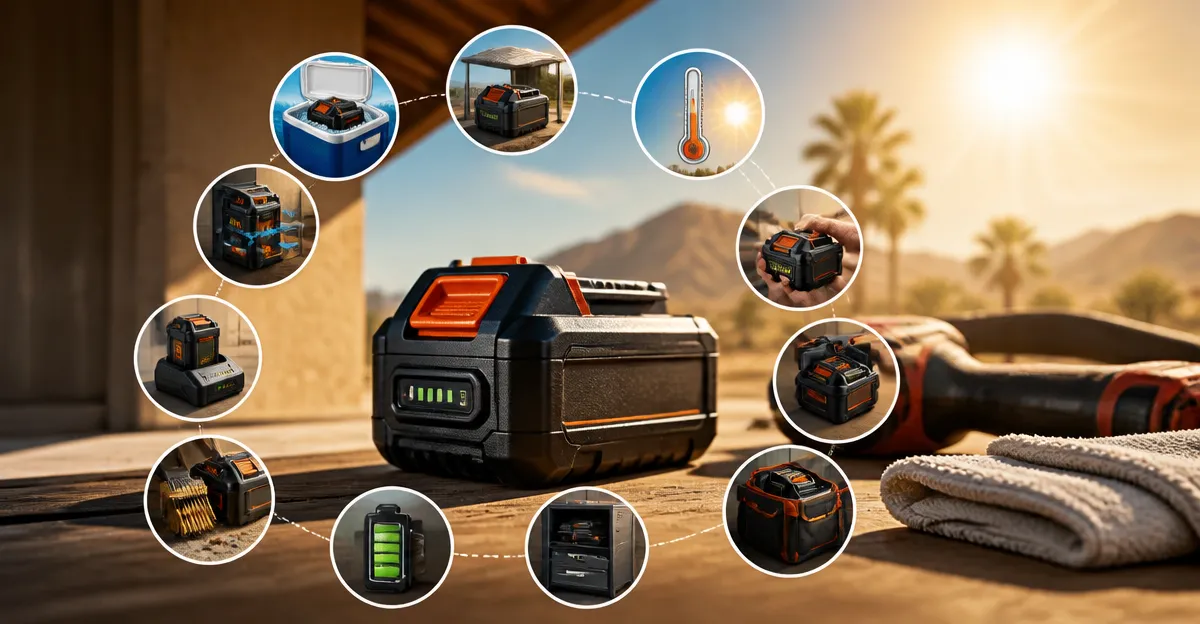
How to Protect Cordless Batteries in Hot Climates: 10 Essential Tips to Prevent Overheating and Extend Lifespan
Working in hot environments places extraordinary stress on lithium‑ion cells used in cordless tools. Excessive heat accelerates chemical reactions inside the battery, reduces capacity, and can lead to permanent damage or safety hazards. This guide teaches the reader ten practical methods to keep batteries cool, maintain performance, and prolong service life. By following each step, professionals and DIY enthusiasts will reduce downtime, avoid costly replacements, and operate tools with confidence even when temperatures exceed 35°C (95°F).
What You’ll Need
- High‑capacity replacement batteries with built‑in thermal protection (e.g., VelgoNyx 8Ah Battery 2-Pack)
- Portable insulated battery case or cooler bag
- Silicone heat‑resistant mat
- Digital thermometer or infrared temperature gun
- Charging station with temperature monitoring
- Clean, dry storage shelf
Step 1: Choose Batteries with Advanced Smart‑Chip Protection
Select batteries that incorporate a 4th‑generation smart chip and multi‑layer safety system. The VelgoNyx 8Ah Battery 2-Pack features a 9‑layer safeguard covering over‑charge, over‑discharge, short‑circuit, over‑current, over‑voltage, performance monitoring, over‑temperature, and reverse‑charge prevention. Priced at $49.90 with a 4.2‑star rating from 351 reviews, these cells deliver consistent power while actively managing heat. The smart chip throttles output when temperature thresholds are approached, preventing thermal runaway and extending cycle life.
Step 2: Store Batteries in a Temperature‑Controlled Environment
Never leave spare batteries in a vehicle trunk or direct sunlight. Store them on a clean, dry shelf inside a climate‑controlled workshop. If ambient temperature regularly exceeds 30°C, place the batteries inside an insulated case or a small cooler bag with a reusable ice pack. The insulated container acts as a thermal barrier, reducing the rate at which external heat reaches the cells.
Step 3: Use a Silicone Heat‑Resistant Mat During Operation
When working on a roof or in a sun‑baked yard, place a silicone mat beneath the tool. The mat absorbs and dissipates heat away from the battery housing, keeping surface temperature lower than the surrounding air. Silicone remains flexible, non‑conductive, and does not degrade with repeated exposure to UV radiation.
Step 4: Monitor Battery Temperature in Real Time
Invest in a handheld infrared thermometer or a digital probe that can read battery surface temperature. Aim the device at the battery during heavy use; if the reading approaches 45°C (113°F), pause the work and allow the battery to cool. Regular monitoring prevents accidental overheating that could otherwise go unnoticed until performance drops.
Step 5: Adopt a Rotational Battery System
Maintain at least two fully charged batteries for each tool. While one battery powers the tool, the other rests in a cool storage area. Rotating batteries ensures each cell spends less continuous time under load, reducing heat buildup. The GVKIEDO 8Ah Battery 2-Pack includes an LED power indicator that helps you quickly identify which battery still has sufficient charge, streamlining rotation without guesswork.
Step 6: Select Batteries Designed for Outdoor Use
For projects that involve prolonged exposure to sun, consider batteries marketed specifically for outdoor equipment. The DEWALT 5Ah Battery 2-Pack is labeled as “Battery for outdoor equipment only.” Although its capacity is lower than the 8Ah options, its internal construction emphasizes heat tolerance and rugged sealing. Priced at $129.99 with a 4.8‑star rating from 3,580 reviews, it provides reliable performance when temperature resilience is paramount.
Step 7: Charge Batteries in a Cool, Ventilated Space
Never charge a battery in direct sunlight or inside a hot garage. Place the charger on a metal surface that can dissipate heat, and ensure adequate airflow around the charger vents. Most modern chargers, including those supplied with DEWALT tools, incorporate temperature sensors that reduce charge current when the battery becomes warm. This automatic throttling protects the cells from overheating during the most vulnerable phase of the charge cycle.
Step 8: Avoid Over‑Discharging the Battery
Most lithium‑ion cells include a low‑voltage cutoff, but repeatedly draining a battery to the cutoff point generates extra heat and shortens lifespan. Aim to recharge when the LED indicator (if present) shows a low‑medium level, or when the tool’s runtime meter indicates 20‑30% remaining. The VelgoNyx 4Ah Battery 2-Pack offers a balance between capacity and weight, making it suitable for light‑duty tools where frequent recharging is feasible.
Step 9: Keep Battery Contacts Clean and Free of Debris
Oxidized or dirty contacts increase electrical resistance, which in turn produces heat during high‑current draws. Use a soft, dry cloth or a dedicated contact cleaner to wipe the terminals before each use. The pure copper connectors found in the VelgoNyx series ensure low resistance, but only if the mating surfaces are clean.
Step 10: Perform Regular Capacity Checks
Every few months, run a load test on each battery to verify that its capacity has not degraded significantly. Compare the run time against the manufacturer’s specifications. If a battery consistently delivers less than 80% of its rated capacity, consider retiring it, as degraded cells are more prone to overheating.
Tips & Pro Tips
- Use a solar‑powered charger for field work; solar panels generate less heat than grid chargers.
- When working in desert conditions, schedule heavy‑draw tasks for early morning or late afternoon when ambient temperature is lower.
- Apply a thin layer of thermal paste between the battery and the tool’s heat sink (if the tool provides one) to improve heat transfer.
- Never place a hot battery directly on a plastic surface; use a metal tray to accelerate cooling.
- Document temperature readings in a field log to identify patterns and adjust your workflow accordingly.
Troubleshooting
| Problem | Possible Cause | Solution |
|---|---|---|
| Battery shuts off abruptly during use | Over‑temperature protection triggered | Allow battery to cool for 10‑15 minutes, then resume. If it recurs, verify ventilation and consider a higher‑capacity battery with better thermal management. |
| Rapid loss of charge after a few weeks | Self‑discharge accelerated by heat | Store batteries in a cooler environment, use insulated cases, and avoid leaving them in hot vehicles. |
| Charging time significantly longer than advertised | Charger overheating or battery internal resistance increase | Move charger to a cooler area, clean contacts, and test battery capacity. Replace if capacity is below 80%. |
Conclusion
By implementing these ten strategies—selecting smart‑chip batteries, controlling storage temperature, monitoring real‑time heat, and rotating charges—users can dramatically reduce the risk of overheating and extend the useful life of their cordless power‑tool batteries. Whether you are a contractor on a scorching construction site or a homeowner tackling summer projects, these practices ensure reliable performance and protect your investment.
Products Mentioned in This Guide
Frequently Asked Questions
How does high temperature impact lithium‑ion cordless batteries?
Heat accelerates internal chemical reactions, reducing capacity, shortening lifespan, and increasing safety risks.
What storage methods help keep batteries cool in hot climates?
Store them in a dry, shaded area inside an insulated case or cooler bag, away from direct sunlight.
Do batteries with built‑in thermal protection prevent overheating?
Yes, they include safety circuits that shut down or limit charge when temperatures exceed safe limits.
How frequently should I check battery temperature during charging?
Monitor it at least every 15‑20 minutes, especially if ambient temperatures are above 35°C (95°F).
Are silicone heat‑resistant mats useful for operating tools in heat?
They provide a barrier that dissipates heat, helping to keep the battery surface cooler during use.