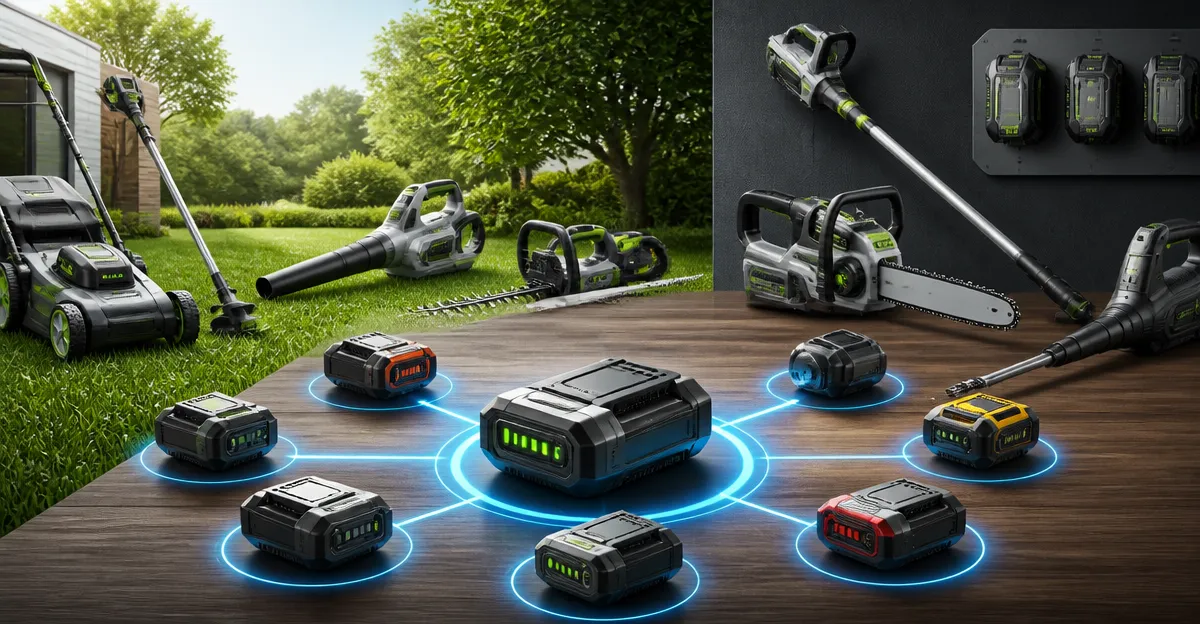
The Ultimate Guide to Battery Platform Compatibility for Cordless Yard Tools
Introduction
Battery-powered yard tools have transformed lawn care by eliminating cords, reducing emissions, and delivering instant torque. This guide explains the essential concepts of battery platform compatibility, helping readers understand how voltage, capacity, and proprietary systems influence tool performance. By the end of the article, one will be able to evaluate different platforms, select the most suitable tool for specific tasks, and apply best‑practice maintenance techniques.
Background and Context
Modern cordless yard equipment relies on lithium‑ion (Li‑ion) cells, which provide high energy density and low self‑discharge. The primary variables that differentiate platforms are:
- Voltage (V): Determines the motor’s power potential; higher voltage generally yields more torque.
- Capacity (Ah): Indicates how long a battery can sustain a given load before recharging.
- Form factor: Physical size and connector design affect interchangeability across brands.
Manufacturers often create proprietary ecosystems, encouraging users to purchase multiple tools that share a single battery pack. Understanding these ecosystems is crucial for cost‑effective tool acquisition.
Key Concepts and Strategies
When evaluating battery platforms, consider the following categories:
- Single‑Voltage Platforms: Tools that operate exclusively at a fixed voltage (e.g., 20 V). They simplify selection but limit power scaling.
- Multi‑Voltage Platforms: Systems that allow the same battery to power tools of different voltages via internal regulators.
- Cross‑Brand Compatibility: Some manufacturers adopt open connectors, enabling batteries to be shared across brands.
Strategic purchasing can reduce long‑term costs. For example, buying a 20 V platform that includes two batteries and a charger provides sufficient runtime for most residential tasks while allowing future expansion with compatible accessories.
Product Recommendations by Platform
The following tools exemplify the major battery platforms currently available. Each recommendation includes real specifications extracted from the product listings.
20 V Platform
BLACK+DECKER 20V Weed Eater Combo combines a string trimmer, edger, and leaf blower in a single 20 V system. It ships with two 20 V batteries and a charger, delivering up to 130 mph leaf‑blowing speed. The 10‑inch cutting swath is suitable for medium‑sized lawns.
WORX 20V Trimmer and Edger offers a 12‑inch cutting diameter and a command‑feed line system. The package includes two 2.0 Ah batteries, providing ample runtime for edging and light trimming.
WORX 20V Cordless Lawn Edger focuses exclusively on edging tasks. Its brush‑less motor and three depth‑adjustment settings give precise control along sidewalks and flower beds.
40 V Platform
Greenworks 40V Trimmer and Blower pairs a 12‑inch string trimmer with a 390 CFM blower. The higher 40 V voltage delivers greater torque for dense weeds, while the included 2.0 Ah battery supports longer sessions.
3‑in‑1 Multi‑Tool Platform
BLACK+DECKER 3‑in‑1 Lawn Tool integrates a trimmer, edger, and mower into a single 20 V system. Two batteries and a charger are provided, and the adjustable height feature allows mowing at 1‑2 inches.
Comparison and Selection Guide
To help readers choose the optimal tool, the table below compares the featured products across critical dimensions.
| Product | Voltage | Battery Count | Primary Functions | Cutting Width / Airflow | Best For |
|---|---|---|---|---|---|
| BLACK+DECKER 20V Weed Eater Combo | 20 V | 2 | Trimmer, Edger, Blower | 10 in. swath / 130 mph blower | Homeowners needing a versatile all‑in‑one tool |
| WORX 20V Trimmer and Edger | 20 V | 2 | Trimmer, Edger | 12 in. cut diameter | Precise edging with moderate trimming |
| WORX 20V Cordless Lawn Edger | 20 V | 1 (included) | Edger only | 7 in. trench width | Dedicated edging with brush‑less efficiency |
| Greenworks 40V Trimmer and Blower | 40 V | 1 | Trimmer, Blower | 12 in. cut / 390 CFM blower | Heavy‑duty trimming and fast leaf removal |
| BLACK+DECKER 3‑in‑1 Lawn Tool | 20 V | 2 | Trimmer, Edger, Mower | 12 in. cut / Adjustable mowing height | Users who want mowing capability without a separate mower |
When selecting a tool, prioritize the following decision points:
- Task Frequency: Frequent users benefit from higher voltage and larger capacity batteries.
- Tool Diversity: If one wishes to own multiple tools, choose a platform that shares batteries across devices.
- Budget Constraints: All‑in‑one combos often provide better value than purchasing separate units.
Best Practices & Tips
Beyond product selection, proper battery management extends tool life:
- Store batteries in a cool, dry environment; extreme heat degrades Li‑ion cells.
- Avoid deep discharge; recharge when the indicator reaches 20 % capacity.
- Use the charger supplied by the manufacturer to maintain optimal charging curves.
- Periodically clean battery contacts with a dry cloth to ensure reliable power transfer.
- When rotating between tools, verify that the battery’s voltage matches the tool’s specifications to prevent motor strain.
Frequently Asked Questions
1. Can I use a 20 V battery in a 40 V tool?
No. A 20 V battery does not provide sufficient voltage for a 40 V motor, which can result in reduced performance or failure to start.
2. Are the batteries for these tools interchangeable across brands?
Generally, manufacturers employ proprietary connectors. While some third‑party adapters exist, using them may void warranties and reduce reliability.
3. How long does a typical 2.0 Ah 20 V battery last?
Runtime varies with load. For light trimming, a 2.0 Ah pack can sustain 30‑45 minutes of continuous use.
4. Do brush‑less motors improve battery efficiency?
Yes. Brush‑less designs reduce friction and heat, allowing more of the battery’s energy to be converted into mechanical work.
5. What safety precautions should I observe when charging Li‑ion batteries?
Charge on a non‑flammable surface, never leave unattended for extended periods, and replace any battery that shows swelling or leakage.
6. Is it worthwhile to purchase an extra battery?
For larger properties or professional use, a second battery enables continuous work by swapping packs while one charges.
7. How do I determine the appropriate cutting width for my lawn?
Consider grass type and lawn size. A 10‑12 inch swath balances speed and maneuverability for most residential lawns.
Conclusion
Battery platform compatibility is the cornerstone of efficient cordless yard care. By understanding voltage, capacity, and ecosystem constraints, one can select tools that deliver optimal performance while minimizing long‑term expense. The featured products illustrate how diverse platforms address specific needs, from lightweight edging to heavy‑duty trimming. Applying the maintenance tips provided will ensure that batteries remain reliable season after season.
Products Featured in This Guide
BLACK+DECKER 20V Weed Eater Combo
Price: Not listed | Rating: Not listed
Featured because it provides a complete 3‑in‑1 solution (trimmer, edger, blower) on a single 20 V platform, making it ideal for homeowners seeking versatility.
WORX 20V Trimmer and Edger
Price: Not listed | Rating: Not listed
Featured for its dedicated 20 V platform with two 2.0 Ah batteries, offering reliable power for trimming and edging tasks.
BLACK+DECKER 3‑in‑1 Lawn Tool
Price: Not listed | Rating: Not listed
Featured because it combines trimming, edging, and mowing in a single 20 V system, reducing the need for multiple devices.
Greenworks 40V Trimmer and Blower
Price: Not listed | Rating: Not listed
Featured for its higher 40 V voltage, delivering greater torque for dense vegetation and a powerful 390 CFM blower.
WORX 20V Cordless Lawn Edger
Price: Not listed | Rating: Not listed
Featured as a specialized edger with brush‑less technology and three depth settings, ideal for precise border definition.