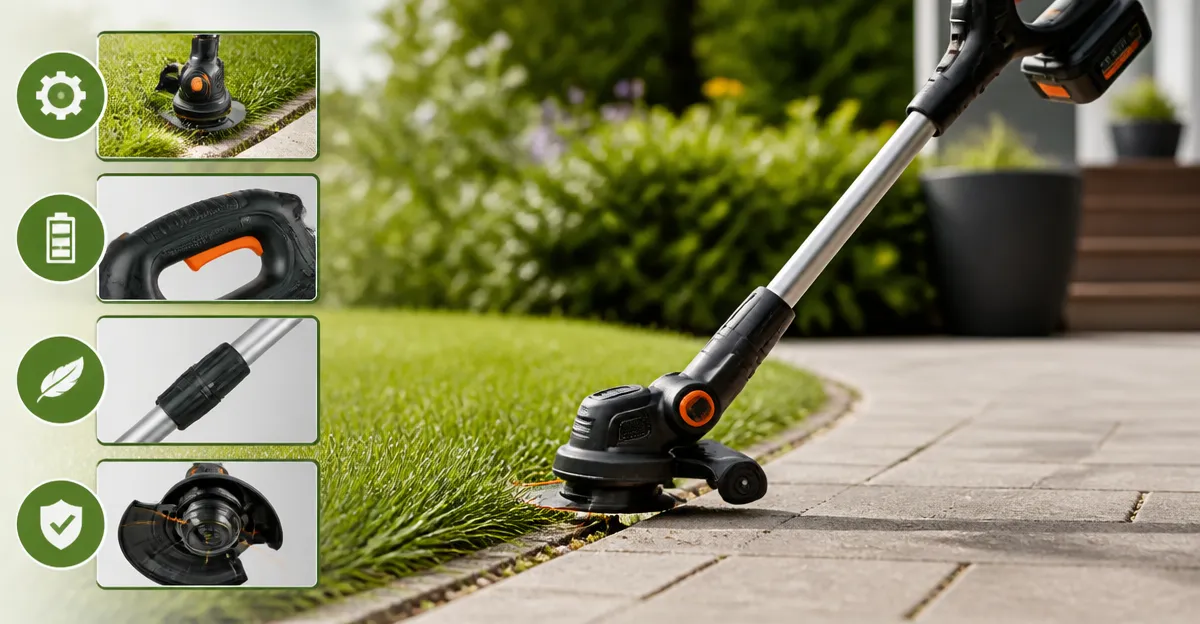
How to Choose the Best Cordless Trimmer for Precise Edging and Patio Crevices: Expert Tips & Buyer's Guide
Introduction
Choosing the right cordless trimmer can transform a tedious yard chore into a quick, precise operation. This guide explains how to evaluate power, runtime, cutting width, ergonomics, and battery ecosystem, enabling one to make an informed purchase. Readers will learn how to match tool specifications to the demands of edging, narrow patio crevices, and irregular garden borders. By following the structured steps, one can avoid common pitfalls such as insufficient battery life, excessive weight, or inadequate line‑feed mechanisms.
What You'll Need
- One cordless string trimmer or edger (recommended models are listed in the steps)
- Two spare 20V or 56V lithium‑ion batteries for extended runtime
- Replacement trimmer line appropriate for the chosen tool
- Protective eyewear and hearing protection
- Basic hand tools for occasional spool adjustments
Step 1: Assess Yard Size and Terrain
Begin by measuring the total square footage of the area that requires trimming and identifying obstacles such as flower beds, stone pathways, and uneven slopes. Larger lawns typically demand a longer battery runtime and a wider cutting swath, whereas compact gardens benefit from a lightweight, maneuverable unit. For narrow patio crevices, a trimmer with a telescopic shaft or adjustable head provides better access.
When the yard is moderate in size, the BLACK+DECKER 20V MAX String Trimmer offers a 12‑inch cutting deck, 6200 RPM power, and a 33% longer runtime per battery, making it suitable for most residential lawns. Priced at $69.00 with a 4.4 rating from 9,669 reviews, it balances cost and capability.
For expansive properties exceeding 5,000 square feet, the EGO POWER+ 16" Cordless Trimmer provides up to 60 minutes of continuous operation on a single 4.0Ah battery, and its 16‑inch swath clears larger areas more efficiently. At $259.00 and a 4.4 rating from 2,277 reviews, it represents a premium investment for heavy‑duty use.
Step 2: Choose Power and Runtime
Power output determines how quickly the trimmer can cut through dense grass and stubborn weeds. Motors rated above 6,000 RPM typically deliver gas‑like torque without the associated emissions. Runtime is equally important; a battery that depletes after ten minutes will interrupt workflow and reduce productivity.
The Heywork 20V Cordless String Trimmer features an 8,000 RPM motor and includes two 4.0Ah batteries, each providing approximately two hours of runtime. Its $49.99 price and 4.4 rating from 368 reviews make it an economical choice for users who value extended operation.
For users who require a brushless motor with low vibration and a five‑year tool warranty, the EGO model again stands out. Its high‑efficiency brushless motor reduces power loss, and the included fast charger restores a full charge in 55 minutes, ensuring minimal downtime between trimming sessions.
Step 3: Evaluate Cutting Width and Edge Control
A wider cutting width reduces the number of passes needed to finish a job, but it can also increase the overall weight of the tool. Edge control is critical for clean, crisp lines along sidewalks, driveways, and patio borders. Look for models that combine a respectable swath with an integrated edging wheel or adjustable guard.
The WORX 20V 2-in-1 String Trimmer offers a 12‑inch cutting diameter, rubberized wheels for straight edging, and a head that tilts 90° for working on slopes. At $79.99 and a 4.3 rating from 28,500 reviews, it delivers reliable edge quality without excessive bulk.
For those who need a larger swath, the EGO trimmer’s 16‑inch cutting width, combined with its patented LINE IQ auto‑feed technology, ensures continuous line delivery and eliminates the need for manual bump‑feed actions. This feature is especially valuable when trimming close to delicate plantings, as it reduces the risk of accidental line contact.
Step 4: Consider Battery Compatibility and Ecosystem
Many homeowners already own batteries from a particular brand, and leveraging an existing ecosystem can reduce overall cost. Compatibility also simplifies charging logistics, as a single charger can service multiple tools.
The KOMASTY 20V Cordless String Trimmer uses a standard 20V platform that is compatible with Makita 18V batteries via an adapter, offering flexibility for users with mixed tool collections. Priced at $59.99 with a 4.2 rating from 634 reviews, it provides a practical solution for those seeking cross‑brand compatibility.
In contrast, the BLACK+DECKER model belongs to the 20V MAX Powerconnect system, allowing seamless battery swaps between other BLACK+DECKER 20V tools. This integration is advantageous for users who already own a cordless drill or mower from the same line.
Step 5: Test Ergonomics and Weight
Ergonomic design influences user fatigue, especially when trimming for extended periods or navigating tight crevices. Adjustable handles, lightweight frames, and balanced weight distribution contribute to a comfortable experience.
The WORX trimmer weighs only 5.5 lbs and features an adjustable spacer guard, making it easy to maneuver around delicate landscaping. Its push‑button line feed eliminates the need for repetitive bumping, further reducing arm strain.
The Heywork model, at 6.3 lbs, includes an adjustable grip and a telescopic carbon‑fiber shaft that can be lengthened to match the operator’s height, providing a customized ergonomic posture. Its auto‑feed system maintains continuous cutting without manual intervention, enhancing overall efficiency.
Step 6: Review Warranty and Support
A solid warranty protects the investment and signals manufacturer confidence. Look for tools that offer multi‑year coverage on both the motor and the battery.
The EGO POWER+ trimmer includes a five‑year tool warranty and a three‑year battery warranty, reflecting its premium build quality and long‑term reliability. The BLACK+DECKER unit provides a two‑year limited warranty, which is standard for mid‑range models.
WORX offers a comprehensive support network through its Power Share platform, allowing users to receive replacement batteries and accessories from a single supplier. This ecosystem reduces downtime when a battery or component fails.
Tips & Pro Tips
- Always charge batteries to full capacity before the first use to calibrate the battery management system.
- Store batteries at approximately 30% charge for long‑term inactivity to preserve lifespan.
- When trimming near hard surfaces, keep the cutting head parallel to the ground to prevent line breakage.
- Use the automatic line feed feature whenever possible to maintain a consistent cutting speed and avoid interruptions.
- For patio crevices, select a trimmer with a narrow shaft or a telescopic extension to reach tight spaces without damaging tiles.
Troubleshooting
- Battery drains quickly: Verify that the battery is fully charged and that the charger is functioning properly. Reduce the speed selector on high‑torque models to extend runtime.
- Line does not feed: Ensure the auto‑feed sensor is clean and that the line is correctly loaded according to the manufacturer’s instructions. Replace worn line with the recommended diameter.
- Excessive vibration: Check that the shaft is securely tightened and that the handle is properly adjusted. A brushless motor, such as on the EGO model, typically minimizes vibration.
- Tool feels heavy: Balance the weight by adding a second battery only when needed, and consider using a lighter model like the BLACK+DECKER for short jobs.
Conclusion
By systematically evaluating yard size, power requirements, cutting width, battery ecosystem, ergonomics, and warranty coverage, one can select a cordless trimmer that delivers precise edging and effortless navigation of patio crevices. The recommended models each excel in specific categories, allowing the buyer to prioritize the features that matter most. Armed with these expert tips, the reader can approach yard maintenance with confidence and achieve professional‑grade results without the inconvenience of gas‑powered equipment.
Products Mentioned in This Guide
Frequently Asked Questions
What battery voltage is ideal for a cordless trimmer used on large yards?
A 56V lithium‑ion battery provides the power and runtime needed for extensive trimming, while 20V may suffice for smaller spaces.
How do I determine the right cutting width for edging and patio crevices?
Choose a narrow cutting width (10‑12 mm) for precise edging and crevice work, and a wider head (15‑20 mm) for open grass areas.
What features indicate good ergonomics in a cordless trimmer?
Look for adjustable handles, lightweight construction, and vibration‑reduction technology to reduce fatigue during extended use.
Why should I have spare batteries for my cordless trimmer?
Spare batteries prevent downtime by allowing you to swap them and continue working while the other charges.
How important is the line‑feed mechanism for precise trimming?
A reliable automatic or bump feed ensures consistent line length, which is crucial for clean edges and tight crevice cuts.