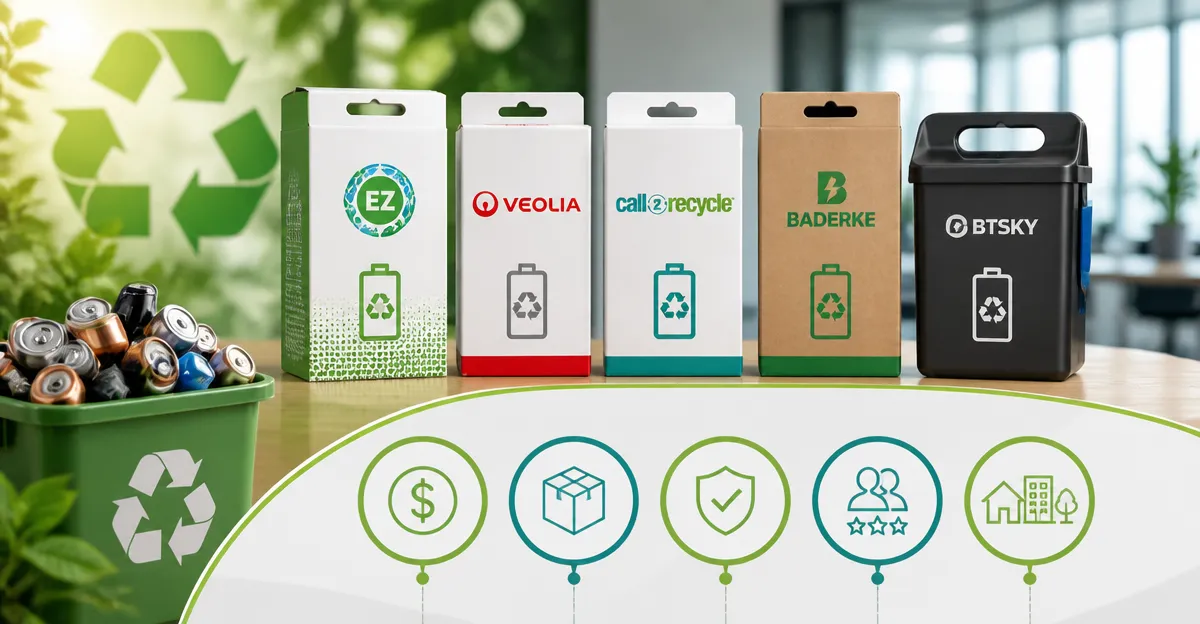
Introduction
Proper disposal of dry‑cell batteries is a critical component of environmental stewardship. When batteries are discarded in landfills, hazardous metals such as mercury, cadmium, and lead can leach into soil and water, posing long‑term risks to ecosystems and human health. The market now offers a variety of ready‑to‑use recycling kits that simplify collection, storage, and return shipping. This article evaluates five Amazon‑available products, examining price, features, customer sentiment, and real‑world suitability. By presenting objective data, readers can select the solution that aligns with household, office, or institutional needs.
Individual Product Overviews
EZ on the Earth Battery Recycling Kit
The EZ on the Earth kit provides a 1‑gallon insulated pail designed for a broad range of dry‑cell chemistries, including alkaline, NiCd, NiMH, lithium‑ion, mercury, and silver‑oxide. It ships inside a cardboard box, contains a heavy‑plastic liner, zip tie, Velcro seal, and a prepaid return label. The kit also includes clear non‑conductive tape for terminal insulation and a step‑by‑step guide for obtaining an online Certificate of Recycling. At $113.00 the product holds up to 13.2 lb of batteries and must be returned within 12 months.
Veolia Dry Cell Battery Recycling Pail
Veolia offers a UN‑rated, DOT‑approved 1‑gallon container with a locking lid and a 4 mil poly liner. The pail can accommodate up to 25 lb of batteries, covering the same chemistries as the EZ kit plus lithium metal. Dimensions are 7.5 in top diameter, 6.625 in bottom diameter, and 6.9 in height. The package includes a prepaid return label and proof of purchase. Priced at $126.36, it is marketed for the lower 48 states only.
Call2Recycle Battery & Phone Box
This large cardboard box is reinforced at the edges and features a hinged lid for secure storage of batteries and mobile devices. While the exact capacity is not quantified in pounds, users report handling roughly 25 lb of mixed batteries. The design emphasizes easy slide‑in loading, transparent handling, and an environmentally responsible recycling pathway. The box costs $144.99 and has a perfect 5‑star rating from two reviewers.
Baderke Battery Recycling Container
Baderke supplies a 1.32‑gallon transparent PVC container with a sealed lid and an attached recycling label. Its dimensions are 8.3 in height, 7.1 in top width, and 5.9 in bottom width. The product is intended solely for storage, not for shipment, and therefore does not include a return label. At $18.99 it is the most affordable option, though the lid does not latch securely according to some users.
BTSKY Battery Recycling Container
The BTSKY container holds approximately 1.3 L (1.18 qt) of batteries, with a compact footprint of 4.8 in height, 5.8 in length, and 3.4 in width. It features a dual‑seal lid design and a transparent body for visual monitoring. Like the Baderke unit, it is intended for storage only. Priced at $13.99, it offers the lowest entry cost, though its small volume may limit institutional use.
Head-to-Head Comparison
When evaluating battery recycling solutions, five dimensions prove most consequential: price and value, features and specifications, customer ratings and feedback, performance and reliability, and best use cases.
Price and Value: BTSKY ($13.99) and Baderke ($18.99) are budget‑friendly storage containers, but they lack prepaid return logistics, which adds hidden costs for organizations that must arrange shipping. The EZ on the Earth kit ($113.00) and Veolia pail ($126.36) include prepaid return labels, delivering a higher upfront cost but lower total expense for bulk recycling. Call2Recycle, at $144.99, is the most expensive, yet its large cardboard construction may reduce handling fees for schools that already partner with Call2Recycle’s national program.
Features and Specifications: Both EZ on the Earth and Veolia provide UN‑approved, DOT‑approved containers with insulated liners and clear instructions for short‑circuit protection. Veolia’s capacity (25 lb) exceeds EZ on the Earth’s (13.2 lb) by nearly double, making it suitable for larger operations. Call2Recycle offers a hinged lid and reinforced edges but no built‑in insulation; it relies on user‑applied tape for safety. Baderke and BTSKY focus on transparent PVC construction for visual monitoring, but they lack any certified shipping capability.
Customer Ratings and Feedback: Veolia holds a perfect 5‑star rating from a single reviewer, praising the protective packaging. Call2Recycle also enjoys a 5‑star rating, with a reviewer noting the convenience of on‑site collection and the ability to identify leaking cells before shipment. EZ on the Earth’s 4.5‑star rating (49 reviews) reflects strong overall satisfaction; one reviewer stated, "Quality product! Amazing customer service. Will be ordering a larger one." Baderke (4.2 stars, 30 reviews) receives mixed comments about lid security, while BTSKY (5 stars, 4 reviews) is praised for quality but criticized for limited size.
Performance and Reliability: Certified containers (EZ on the Earth, Veolia) meet UN and DOT standards, ensuring safe transport of hazardous materials. The inclusion of pre‑taped terminals and insulated liners reduces the risk of short circuits. Call2Recycle’s cardboard construction is sturdy enough for typical office loads, yet it requires users to wrap each battery individually—a step some find burdensome but also a safety advantage. PVC containers (Baderke, BTSKY) perform well for short‑term storage but are not designed for shipment, limiting their reliability in a full recycling loop.
Best Use Cases: Large institutions with high battery turnover (universities, manufacturing facilities) benefit most from Veolia’s higher capacity and certified shipping. Small‑to‑medium offices or households that generate moderate volumes should consider EZ on the Earth for its balance of capacity, certification, and prepaid return. Schools that already partner with Call2Recycle may find the Cardboard Box the most seamless integration. For purely on‑site storage without immediate shipment, Baderke and BTSKY provide economical, transparent options.
Comparison Table
| Product | Price (USD) | Capacity | Certification | Includes Return Label | Rating |
|---|---|---|---|---|---|
| EZ on the Earth Battery Recycling Kit | 113.00 | 13.2 lb (1 gal) | UN‑approved | Yes | 4.5/5 (49) |
| Veolia Dry Cell Battery Recycling Pail | 126.36 | 25 lb (1 gal) | UN & DOT approved | Yes | 5/5 (1) |
| Call2Recycle Battery & Phone Box | 144.99 | ~25 lb (large box) | None (user‑handled) | No (user ships) | 5/5 (2) |
| Baderke Battery Recycling Container | 18.99 | 1.32 gal (≈8 lb) | None (storage only) | No | 4.2/5 (30) |
| BTSKY Battery Recycling Container | 13.99 | 1.3 L (≈0.5 gal) | None (storage only) | No | 5/5 (4) |
Pros & Cons
EZ on the Earth Battery Recycling Kit
- Pros: Certified UN container, prepaid return label, supports many chemistries, includes terminal‑insulating tape.
- Cons: Lower capacity than Veolia, internal space reduced by insulation, must return within 12 months.
Veolia Dry Cell Battery Recycling Pail
- Pros: Highest capacity (25 lb), UN & DOT approval, robust locking lid, includes all shipping paperwork.
- Cons: Higher price, limited to contiguous United States, no explicit guidance on terminal tape in description.
Call2Recycle Battery & Phone Box
- Pros: Large volume, reinforced edges, hinged lid, excellent for mixed batteries and phones, positive user feedback on safety.
- Cons: No certified container, users must arrange their own shipping, higher upfront cost.
Baderke Battery Recycling Container
- Pros: Very affordable, transparent PVC for visual monitoring, includes label, fits narrow spaces.
- Cons: Not certified for transport, lid does not latch securely, intended for storage only.
BTSKY Battery Recycling Container
- Pros: Lowest price, dual‑seal lid, transparent design, compact footprint for home use.
- Cons: Small capacity (1.3 L), unsuitable for larger offices, no shipping certification.
Recommendations
For large‑scale institutional recycling – Veolia Dry Cell Battery Recycling Pail is the optimal choice because its 25 lb capacity and UN/DOT certifications reduce handling risk and shipping frequency.
For medium‑size offices or households with regular battery turnover – EZ on the Earth Battery Recycling Kit balances cost, certification, and convenience with its prepaid return service.
For schools already partnered with Call2Recycle – the Call2Recycle Battery & Phone Box integrates seamlessly into existing collection programs and simplifies bulk drop‑off.
For low‑volume home or office storage – Baderke offers an inexpensive, transparent container that keeps batteries visible and organized, provided users arrange separate shipping.
For ultra‑compact personal use – BTSKY’s small, dual‑seal container is ideal for a single‑room setup where space is at a premium.
FAQ
- Do these kits accept lithium‑ion batteries? Both EZ on the Earth and Veolia allow rechargeable lithium‑ion batteries, provided each cell contains no more than 5 g of lithium and terminals are taped. Call2Recycle also accepts lithium‑ion but requires individual wrapping.
- Is the prepaid return label valid for international shipping? No. Veolia explicitly limits shipments to the lower 48 states, and EZ on the Earth requires return within the United States. International users must arrange their own logistics.
- Can the PVC containers be used for shipping? They are designed for on‑site storage only. Neither Baderke nor BTSKY includes certification or a return label, so users must transfer batteries to a certified carrier for disposal.
- How often should the containers be emptied? Manufacturers recommend returning the filled kit within 12 months (EZ on the Earth) or whenever the weight approaches the stated capacity (Veolia 25 lb). Regular quarterly checks prevent over‑filling.
- What happens after the kit is shipped back? Both EZ on the Earth and Veolia process the batteries at certified recycling facilities and issue an online Certificate of Recycling, confirming responsible material recovery.
- Are there any safety concerns with short‑circuiting? All certified kits include non‑conductive tape for terminal insulation. Users must follow the provided instructions; failure to tape lithium or button cells can lead to short‑circuit hazards.
- Which product provides the best value per pound of batteries? Considering price and capacity, Veolia offers $5.05 per pound (126.36/25 lb) whereas EZ on the Earth is $8.56 per pound (113/13.2 lb). For pure storage, BTSKY is $13.99 for 0.5 gal, but without shipping, the cost per pound cannot be directly compared.
Conclusion
Choosing a battery recycling solution hinges on volume, certification needs, and budget constraints. For organizations that require a certified, high‑capacity container with a hassle‑free return process, Veolia stands out as the clear leader. For most households and mid‑size offices, EZ on the Earth delivers reliable certification and prepaid shipping at a reasonable price. Call2Recycle excels for entities already integrated into its national program, while Baderke and BTSKY serve as economical storage options for low‑volume environments. By matching the appropriate product to the specific use case, users can ensure safe, compliant, and environmentally responsible battery disposal.
Products Mentioned in This Review
Frequently Asked Questions
Why should dry‑cell batteries be recycled instead of thrown in the trash?
Recycling prevents hazardous metals like mercury, cadmium, and lead from leaching into soil and water, protecting ecosystems and human health.
What types of batteries can the EZ on the Earth recycling kit accept?
It accepts alkaline, NiCd, NiMH, lithium‑ion, mercury, and silver‑oxide dry‑cell batteries.
How does a prepaid return label simplify battery recycling?
The label lets users ship the filled pail to a recycling facility at no extra cost, eliminating the need for separate postage.
Are insulated pails necessary for safe battery storage?
Yes, insulated pails reduce the risk of short‑circuits and contain any potential leaks during transport.
Can these Amazon recycling kits be used in offices or schools?
Absolutely; their size and easy‑to‑follow instructions make them suitable for household, office, or institutional battery collection.